
Core strength isn’t just about achieving visible abs—it’s the foundation of every movement you make, from lifting groceries to performing advanced athletic feats. Bridge and side-plank holds represent two of the most effective isometric exercises for building unshakeable core endurance that translates into real-world functional strength.

These deceptively simple movements challenge your body in ways that traditional crunches never could. By engaging multiple muscle groups simultaneously and requiring sustained tension, they develop the kind of deep, stabilizing strength that protects your spine, improves your posture, and enhances performance across virtually every physical activity you undertake.
🏋️ Understanding the Power of Isometric Core Training
Isometric exercises involve holding a static position under tension, forcing your muscles to work continuously without changing length. Unlike dynamic movements that involve repetitive contractions, isometric holds demand sustained muscular engagement that builds exceptional endurance and stability.
When you hold a bridge or side plank, you’re not just working your abs. You’re activating a complex network of muscles including the transverse abdominis, obliques, erector spinae, glutes, hip flexors, and shoulder stabilizers. This multi-dimensional engagement creates functional strength patterns that your body can immediately apply to everyday movements.
Research consistently demonstrates that isometric core exercises produce superior activation of deep stabilizing muscles compared to traditional dynamic ab exercises. The continuous tension creates adaptations at the neuromuscular level, improving your body’s ability to maintain proper alignment under load and during movement.
The Bridge Hold: Building Your Posterior Chain Foundation
The bridge hold targets your posterior chain—the interconnected muscles along the back of your body that often get neglected in traditional core training. This exercise primarily activates your glutes, hamstrings, and lower back while simultaneously engaging your abs to maintain proper spinal alignment.
Proper Bridge Hold Technique ✅
To perform a bridge hold correctly, lie on your back with knees bent and feet flat on the floor, positioned hip-width apart. Your feet should be close enough to your glutes that you can barely touch your heels with your fingertips. Press through your heels to lift your hips toward the ceiling, creating a straight line from your shoulders through your hips to your knees.
The key is avoiding hyperextension of your lower back. Many people push their hips too high, creating an arch that shifts tension away from the glutes and into the lumbar spine. Instead, think about tucking your pelvis slightly and squeezing your glutes maximally. Your ribs should stay down, and your abs should feel engaged throughout the hold.
Maintain steady breathing—never hold your breath during isometric exercises. Breathe naturally while maintaining constant tension. Your shoulders should remain relaxed on the floor, and you should feel the primary burn in your glutes and hamstrings, with secondary engagement in your abs and lower back.
Progressive Bridge Variations for Continued Growth
Once you can hold a standard bridge for 60 seconds with perfect form, it’s time to progress. The single-leg bridge dramatically increases the challenge by removing one base of support, forcing the stabilizing muscles to work harder. Elevating your feet on a bench or stability ball shifts the angle and increases range of motion, intensifying the demand on your posterior chain.
The marching bridge adds a dynamic element while maintaining isometric tension. Hold the bridge position and slowly lift one foot off the ground, hold briefly, then alternate. This variation challenges your body’s ability to maintain stability while one side moves independently—a crucial component of functional movement.
The Side Plank: Mastering Lateral Stability and Oblique Strength
While bridges address the front-to-back plane of stability, side planks target the often-neglected lateral plane. This exercise builds exceptional strength in your obliques, quadratus lumborum, and the muscles responsible for preventing unwanted side-to-side movement during activities like running, rotating, and lifting.
Side plank holds create a unique challenge because they require your core to resist both gravity pulling you downward and the rotational forces trying to twist your body. This multi-directional resistance develops the kind of comprehensive stability that keeps your spine protected during complex, real-world movements.
Executing the Perfect Side Plank 💪
Begin lying on your side with your elbow directly beneath your shoulder, forearm perpendicular to your body. Stack your feet or stagger them for more stability if needed. Engage your core and lift your hips off the ground, creating a straight line from your head through your feet.
The most common mistake is allowing the hips to sag toward the floor or pike upward. Your body should form a perfect plank—hence the name. Keep your top shoulder pulled back to avoid rotating forward. Your neck should remain neutral, aligned with your spine rather than drooping or straining upward.
Focus on creating tension throughout your entire body. Your bottom oblique should feel like it’s crunching to hold you up. Your glutes should be engaged, preventing your hips from tilting forward or backward. Even your legs should feel active, with your quads and inner thighs contributing to the stability.
Side Plank Progressions for Advanced Practitioners
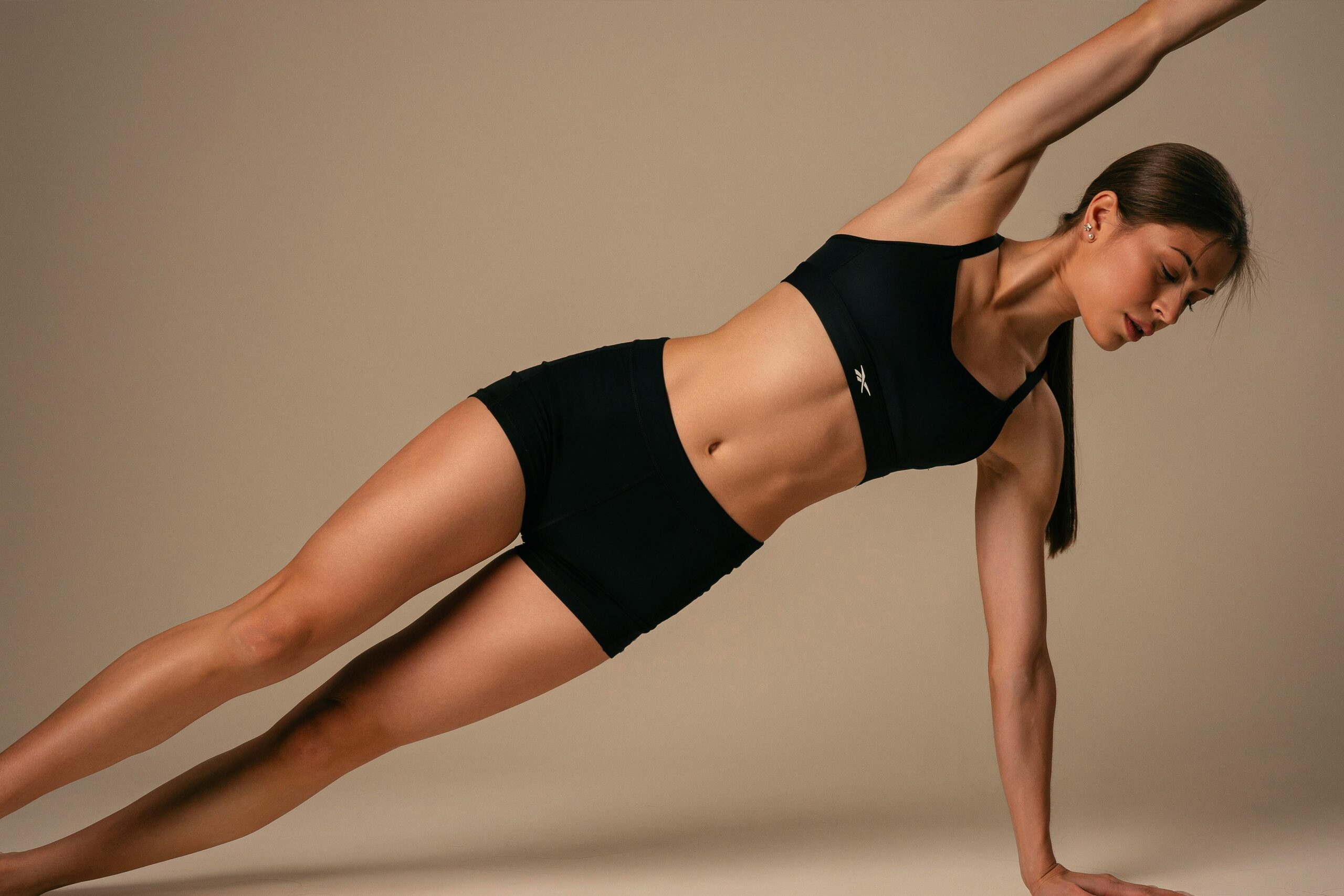
The side plank offers numerous progression options. Extending your top arm overhead increases the lever length and challenges your stability. Lifting your top leg creates an additional balance challenge while intensifying glute activation. The star side plank, with both top arm and leg extended, represents an advanced variation requiring exceptional control.
Adding movement while maintaining the side plank position develops dynamic stability. Hip dips involve lowering your hip toward the floor and raising it back up, creating a controlled range of motion through your obliques. Top leg lifts add an abduction component that fires up your hip stabilizers.
Building a Strategic Core Endurance Program
Incorporating bridge and side-plank holds into your training requires strategic programming. These exercises are exceptionally taxing on the neuromuscular system, so quality always trumps quantity. Start conservatively and build progressively to avoid overtraining and ensure proper recovery.
Beginner Protocol: Establishing the Foundation
If you’re new to isometric core training, begin with three sets of 20-30 second holds for each exercise. Perform these 3-4 times per week on non-consecutive days. Focus exclusively on maintaining perfect form rather than extending hold duration. Rest 60-90 seconds between sets to ensure quality repetitions.
During this foundational phase, body awareness is your primary goal. Learn what proper engagement feels like. Notice when muscles start to fatigue and form begins to break down. Building this kinesthetic awareness now will serve you throughout your training journey.
Intermediate Development: Building Time Under Tension
Once you can comfortably hold perfect form for 30 seconds, begin extending your holds by 5-10 seconds weekly. Your goal is reaching 60-second holds with impeccable technique. At this stage, you might perform 3-4 sets of 45-60 second holds, 3-4 times weekly.
Consider incorporating a pyramid protocol: start with a 30-second hold, rest 45 seconds, then 45 seconds, rest 45 seconds, then 60 seconds, rest 60 seconds, then back down 45 seconds, rest 45 seconds, and finish with 30 seconds. This approach builds endurance while managing fatigue.
Advanced Protocols: Maximizing Core Endurance
Advanced practitioners should focus on progressive variations rather than simply extending hold times indefinitely. Once you reach 60-90 second holds with perfect form, transition to more challenging variations. A single-leg bridge for 45 seconds creates more adaptation than a standard bridge for 2 minutes.
Circuit training becomes effective at this level. Perform a 60-second bridge hold, transition immediately to 30 seconds per side of side planks, then into a front plank for 60 seconds, with minimal rest between exercises. This approach develops the kind of comprehensive core endurance that translates directly to athletic performance.
Common Mistakes That Sabotage Your Progress ⚠️
Even experienced exercisers frequently make critical errors with these seemingly simple movements. Recognizing and correcting these mistakes is essential for maximizing benefits while minimizing injury risk.
Holding your breath is perhaps the most common error. When you stop breathing, you create excessive intra-abdominal pressure and engage muscles in a way that doesn’t translate to functional movement. Always maintain steady, controlled breathing throughout isometric holds.
Allowing form to deteriorate as fatigue sets in negates the benefits of extended hold times. A 30-second hold with perfect form provides more benefit than a 60-second hold where your hips sag and your spine misaligns. Always prioritize quality over duration.
Neglecting progressive overload limits your development. Your body adapts to stimulus, so you must continuously challenge it with longer holds, more difficult variations, or more sets to continue making progress. Create a structured progression plan rather than randomly repeating the same workout indefinitely.
Integrating Bridge and Side Planks Into Your Complete Fitness Routine
These exercises shouldn’t exist in isolation—they’re most effective as components of a comprehensive training program. Strategic integration ensures they complement rather than compromise your other training goals.
Perform core endurance work after primary strength training but before conditioning work. Your core needs to be relatively fresh to execute these holds properly, but performing them first would compromise your ability to safely execute compound lifts. Post-strength, pre-cardio represents the sweet spot for most training programs.
On non-strength training days, core work can serve as an excellent standalone session or complement mobility and flexibility work. A 20-minute session focusing on various plank and bridge variations provides substantial training stimulus without the systemic fatigue of heavy lifting or intense conditioning.
Tracking Progress and Measuring Core Endurance Improvements 📊
Quantifying your core endurance development helps maintain motivation and ensures progressive overload. Keep a training log documenting hold times, variations performed, and subjective difficulty ratings.
| Week | Bridge Hold | Side Plank (Each Side) | Variation Notes |
|---|---|---|---|
| 1-2 | 3 x 20-30 sec | 3 x 15-20 sec | Standard positions, establishing form |
| 3-4 | 3 x 35-45 sec | 3 x 25-30 sec | Maintaining perfect technique |
| 5-6 | 3 x 50-60 sec | 3 x 35-45 sec | Consider adding marching bridges |
| 7-8 | 3 x 60 sec | 3 x 45-60 sec | Introduce single-leg variations |
Beyond hold times, monitor how these exercises affect your performance in other activities. Notice whether your running form stays cleaner during longer runs. Observe if your lifting technique remains solid deeper into training sessions. These real-world improvements represent the true measure of functional core endurance.
The Mind-Muscle Connection: Mental Strategies for Longer Holds 🧠
Isometric holds present a unique mental challenge. Unlike dynamic exercises where you can focus on completing a specific number of repetitions, holds require sustained mental engagement throughout the entire time under tension.
Develop focusing techniques that help you maintain concentration. Some athletes count breaths—inhale for four counts, exhale for four counts—creating a meditative rhythm. Others use visualization, imagining their core as an unyielding steel beam. Experiment to discover what mental approach works best for you.
Break long holds into manageable segments mentally. Rather than thinking “I need to hold this for 60 seconds,” focus on “I’ll hold this for 10 more seconds” six times. This psychological chunking makes challenging holds feel more achievable.
Recovery and Adaptation: Allowing Your Core to Strengthen
Like any intense training stimulus, isometric core work requires adequate recovery. Your muscles don’t strengthen during exercise—they strengthen during the recovery period afterward when your body adapts to the stress you’ve imposed.
Avoid performing maximum-effort core endurance work on consecutive days. While your core muscles recover relatively quickly compared to larger muscle groups, the neuromuscular system needs time to adapt. Most people thrive on 3-4 core-focused sessions weekly with at least one rest day between intense sessions.
Pay attention to recovery indicators. Persistent soreness lasting more than 48 hours, declining performance despite adequate rest, or inability to maintain proper form all suggest you need additional recovery time. Training harder isn’t always training smarter—strategic recovery separates those who make consistent progress from those who plateau or regress.
Real-World Applications: How Core Endurance Transforms Daily Movement
The stability and endurance you develop through bridge and side-plank training manifests in countless everyday situations. Carrying groceries becomes easier as your core effortlessly stabilizes your spine under load. Prolonged standing or walking feels less fatiguing because your postural muscles have developed exceptional endurance.
Athletic performance across virtually every sport improves with enhanced core stability. Runners maintain efficient form longer into races. Cyclists generate more power with less energy waste. Tennis players rotate more explosively while maintaining balance. The transfer effect from focused core training to sport-specific performance is remarkably consistent across activities.
Perhaps most importantly, strong core endurance provides significant protection against lower back pain—one of the most common chronic conditions affecting adults. By developing the muscular endurance to maintain proper spinal alignment throughout the day, you reduce the cumulative stress that leads to pain and dysfunction.
Mastering the Journey: Your Path to Unshakeable Core Strength 🎯
Developing exceptional core endurance through bridge and side-plank holds isn’t a quick fix—it’s a systematic journey requiring consistency, progressive challenge, and attention to proper technique. The athletes who achieve the most impressive results aren’t those who seek shortcuts, but those who commit to the process with patience and discipline.
Start where you are, not where you wish you were. If you can only hold a bridge for 15 seconds with good form, that’s your starting point. Embrace it without judgment and focus on steady, incremental improvement. Small, consistent gains compound dramatically over weeks and months.
Remember that core strength isn’t an aesthetic pursuit—it’s functional capacity that enhances everything you do physically. The stability you build holding a side plank translates directly to carrying a child, lifting a heavy box, or maintaining form during the final mile of a race. This is training with purpose, developing strength that serves you in every movement you make.
Your core is the foundation upon which all movement is built. Invest in that foundation through dedicated bridge and side-plank training, and you’ll unlock levels of strength, stability, and balance that transform not just your workouts, but your entire physical experience of life.