
Movement is life, and life is movement. The ability to stand, sit, and move freely is fundamental to our daily existence, yet many of us take these capabilities for granted until they begin to fade.

The functional squat-to-stand test has emerged as a powerful assessment tool that reveals much about your physical fitness, mobility, and longevity potential. This simple yet profound movement pattern can unlock insights into your strength, balance, and overall functional capacity while providing a roadmap for improvement.
🎯 What Makes the Squat-to-Stand Test So Important?
The squat-to-stand movement is one of the most fundamental human movement patterns. From the moment we learn to walk as toddlers, we’re constantly moving between sitting and standing positions. This seemingly simple action requires a complex coordination of multiple muscle groups, joint mobility, and neuromuscular control.
Research has shown that the ability to perform this movement efficiently correlates strongly with functional independence, reduced fall risk, and even mortality predictions in older adults. But this test isn’t just for seniors—it’s a valuable assessment tool for anyone interested in optimizing their physical performance and longevity.
The beauty of the functional squat-to-stand test lies in its accessibility. You don’t need expensive equipment, a gym membership, or specialized training to perform it. All you need is a chair and a few minutes of your time to gain valuable insights into your physical capabilities.
🔍 Understanding the Mechanics Behind the Movement
The squat-to-stand movement engages multiple body systems simultaneously. Your lower body muscles—including quadriceps, hamstrings, glutes, and calves—must generate sufficient force to lift your body weight against gravity. Meanwhile, your core muscles stabilize your spine and transfer force efficiently between your upper and lower body.
Joint mobility plays an equally critical role. Your ankles must have adequate dorsiflexion range to allow your knees to track forward without your heels lifting. Your hips need sufficient flexion mobility to achieve the seated position and extension strength to return to standing. Even your thoracic spine contributes by maintaining an upright posture throughout the movement.
Balance and proprioception are also tested during this functional movement. Your nervous system must constantly process sensory information and make micro-adjustments to maintain equilibrium as your center of gravity shifts through the movement pattern.
The Muscle Groups That Matter Most
Several key muscle groups work in harmony during the squat-to-stand movement:
- Quadriceps: These powerful thigh muscles extend your knees and bear the primary load during the ascending phase
- Gluteus maximus: Your body’s largest muscle drives hip extension and provides substantial power for standing
- Hamstrings: These muscles assist in hip extension and help control the descent phase
- Core stabilizers: Your abdominals and back muscles maintain spinal alignment and transfer force efficiently
- Calf muscles: The gastrocnemius and soleus help push through the feet and maintain balance
📊 How to Perform the Functional Squat-to-Stand Test
Performing the test correctly ensures accurate results and minimizes injury risk. Begin by selecting a standard chair with a seat height of approximately 17 inches—roughly the height of a typical dining chair. The chair should be stable and placed against a wall to prevent it from sliding backward.
Start in the seated position with your feet flat on the floor, approximately hip-width apart. Your arms can be crossed over your chest, held out in front for balance, or used to push off from the chair, depending on which variation you’re testing. The most challenging version involves keeping your arms crossed throughout the movement.
From this starting position, stand up completely until your hips and knees are fully extended, then return to the seated position with control. The goal is to complete as many repetitions as possible within 30 seconds while maintaining proper form.
Key Form Points to Remember
Proper technique maximizes the test’s effectiveness and safety. Keep your chest lifted and avoid excessive forward lean, which places unnecessary stress on your lower back. Your knees should track in line with your toes rather than collapsing inward—a common compensation pattern that indicates hip weakness.
Maintain consistent breathing throughout the test. Exhale as you stand and inhale as you lower yourself back to the chair. Holding your breath can elevate blood pressure and reduce performance. Control the descent phase rather than simply dropping into the chair, as this eccentric control demonstrates muscular strength and coordination.
📈 Interpreting Your Results and Setting Benchmarks
The number of repetitions you can complete within 30 seconds provides valuable information about your functional fitness level. While norms vary by age and gender, general benchmarks can help you understand where you stand and set improvement goals.
For adults aged 60-64, completing 12-17 repetitions for women and 14-19 for men represents average performance. Younger adults should typically achieve higher numbers, while older age groups may have slightly lower benchmarks. However, these numbers serve as general guidelines rather than absolute standards.
| Age Group | Women (Average) | Men (Average) |
|---|---|---|
| 60-64 | 12-17 reps | 14-19 reps |
| 65-69 | 11-16 reps | 12-18 reps |
| 70-74 | 10-15 reps | 12-17 reps |
| 75-79 | 10-15 reps | 11-17 reps |
More important than comparing yourself to population norms is tracking your personal progress over time. Establish a baseline measurement and retest every 4-6 weeks to monitor improvements resulting from your training efforts.
💪 Building Strength for Better Performance
Improving your squat-to-stand performance requires a targeted approach to strength development. Progressive resistance training forms the foundation of any effective improvement program. Focus on exercises that directly strengthen the muscles involved in the movement pattern while also addressing any weaknesses or imbalances.
Bodyweight squats provide an excellent starting point for building foundational strength. Begin with partial range squats if full-depth movements are challenging, gradually increasing depth as strength improves. Focus on maintaining proper alignment and controlled movement rather than rushing through repetitions.
Goblet squats add external resistance using a dumbbell or kettlebell held at chest height. This variation strengthens the same muscle groups while also challenging core stability. The front-loaded weight encourages an upright torso position, which carries over well to the squat-to-stand movement pattern.
Essential Exercises for Functional Leg Strength
Incorporate these exercises into your training routine to build comprehensive lower body strength:
- Bulgarian split squats: This single-leg variation addresses strength imbalances and improves balance
- Step-ups: Mimicking the vertical thrust of standing, step-ups build practical strength
- Wall sits: Isometric holds develop muscular endurance in the exact positions used during the test
- Glute bridges: Strengthen hip extensors critical for powerful standing movements
- Calf raises: Build ankle strength and stability essential for balance and push-off power
🧘 Unlocking Mobility for Fluid Movement
Strength without mobility creates inefficient movement patterns and increases injury risk. Adequate joint range of motion allows your muscles to generate force through complete movement paths, maximizing efficiency and performance.
Ankle mobility often represents the primary limiting factor for many people attempting to improve their squat-to-stand performance. Limited dorsiflexion prevents the knees from tracking forward properly, forcing compensations like heel lifting or excessive forward lean. Regular ankle mobility work can dramatically improve movement quality.
Hip mobility requires attention to both flexion and extension ranges. Tight hip flexors prevent full hip extension at the top of the standing position, while limited hip flexion restricts depth and forces compensatory rounding of the lower back. A comprehensive approach addressing both directions yields the best results.
Effective Mobility Drills for Daily Practice
Dedicate 10-15 minutes daily to these mobility exercises for noticeable improvements:
- Ankle rocks: Face a wall and drive your knee forward while keeping your heel down to improve dorsiflexion
- 90/90 hip stretches: This position addresses both internal and external hip rotation simultaneously
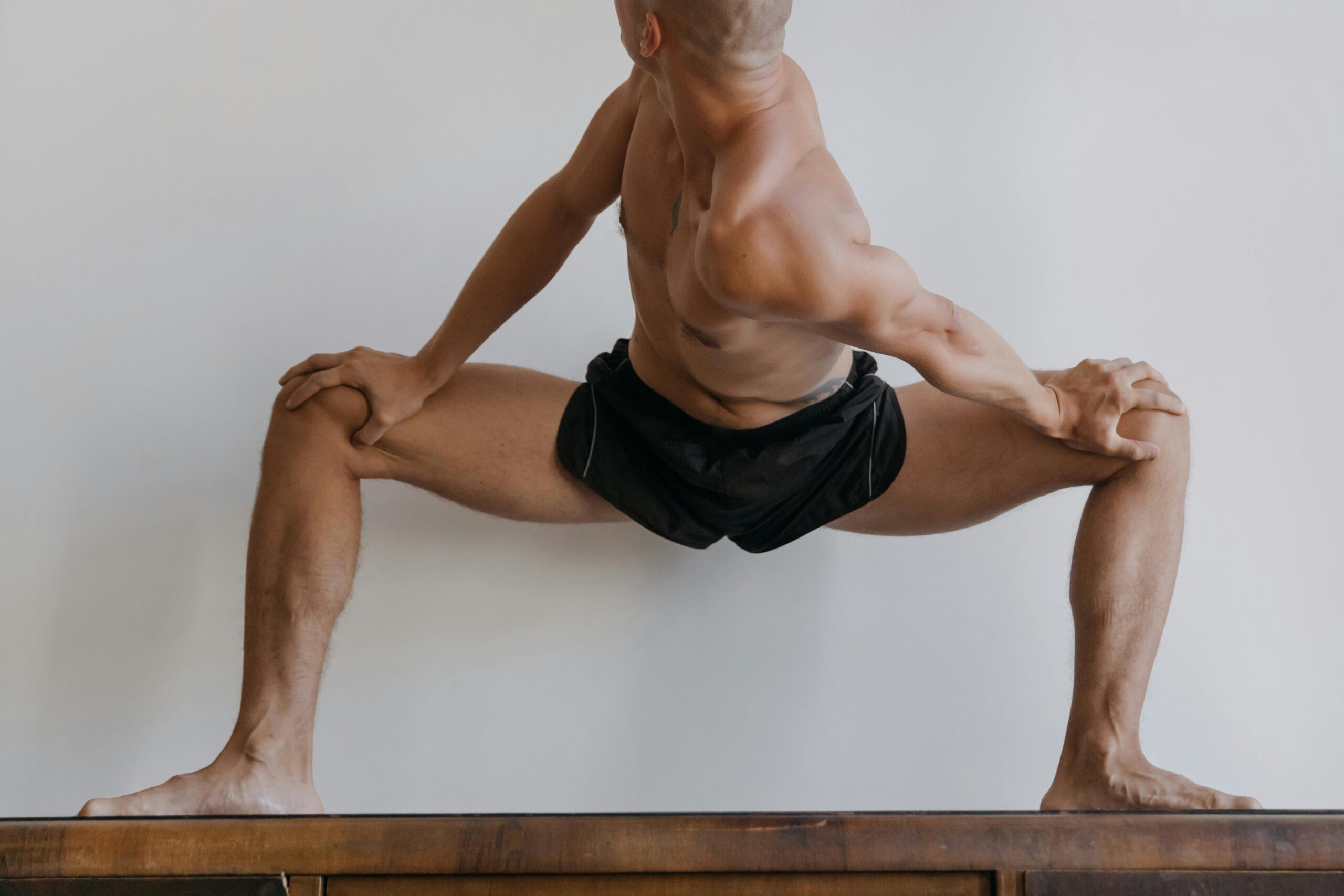
- Deep squat holds: Simply sitting in a deep squat position for 2-3 minutes improves overall lower body mobility
- Hip flexor stretches: Half-kneeling positions with posterior pelvic tilt target tight hip flexors
- Thoracic spine rotations: Improved upper back mobility supports better posture during the movement
⚖️ Balance Training for Confidence and Control
Balance capabilities decline naturally with age but respond remarkably well to targeted training. Improved balance directly enhances squat-to-stand performance by allowing more confident movement execution and reducing compensation patterns born from instability fears.
Single-leg stance exercises form the cornerstone of balance training. Begin by simply standing on one leg for 30-60 seconds, using light fingertip support if needed. Progress by removing hand support, closing your eyes, or performing the exercise on unstable surfaces like foam pads.
Dynamic balance challenges prepare your nervous system for the constantly changing demands of the squat-to-stand movement. Heel-to-toe walking, single-leg reaches, and controlled weight shifts all develop the neuromuscular control needed for stable, confident movement.
🎯 Creating Your Personalized Improvement Program
Success requires a structured approach that addresses your specific limitations while progressively building capacity. Begin with an honest assessment of your current abilities and identify your primary limiting factors—is it strength, mobility, balance, or a combination?
Structure your weekly training to include 2-3 strength sessions, daily mobility work, and regular balance practice. This frequency provides sufficient stimulus for adaptation while allowing adequate recovery. Remember that consistency trumps intensity when building long-term functional capacity.
Track your progress diligently using a training journal or fitness app. Record not just your test scores but also subjective factors like movement quality, confidence level, and how the movement feels. These qualitative markers often improve before quantitative measurements change, providing motivation during plateaus.
Sample Weekly Training Structure
This framework provides a starting point that you can adjust based on individual needs and schedule constraints:
- Monday: Lower body strength training focusing on squatting patterns (45 minutes)
- Tuesday: Mobility work and balance training (20 minutes)
- Wednesday: Active recovery with walking and light stretching (30 minutes)
- Thursday: Lower body strength training emphasizing single-leg movements (45 minutes)
- Friday: Mobility work and balance training (20 minutes)
- Weekend: Recreational activities plus daily mobility routine (15 minutes)
🚀 Advanced Variations to Continue Progression
Once you’ve mastered the standard squat-to-stand test, numerous variations provide continued challenge and development. Single-leg sit-to-stands dramatically increase the strength and balance demands, preparing you for real-world scenarios where unilateral strength matters.
Pistol squats represent the ultimate expression of single-leg squatting ability. While extremely challenging, working toward this movement builds exceptional leg strength, mobility, and balance. Use progression exercises like assisted pistol squats with a suspension trainer or counterweight to build toward the full movement.
Adding external resistance through weighted vests or holding dumbbells increases the strength stimulus without changing the fundamental movement pattern. This approach allows continued strength development even after you’ve maximized repetitions on the basic test.
🌟 Beyond the Test: Real-World Applications
The functional squat-to-stand test isn’t just about numbers—it’s about maintaining independence and quality of life. Every time you stand from a chair, get up from the floor, or lift an object from a low position, you’re using this fundamental movement pattern.
Strong squat-to-stand ability correlates with reduced fall risk, a critical consideration as we age. Falls represent a leading cause of injury and loss of independence in older adults, making fall prevention through functional strength training a crucial health priority.
Athletic performance across virtually all sports benefits from improved functional squatting ability. Whether you’re playing recreational tennis, hiking challenging trails, or simply keeping up with grandchildren, the strength and mobility developed through squat-to-stand training enhances your capabilities.
💡 Common Mistakes and How to Avoid Them
Many people inadvertently sabotage their progress through common training errors. Rushing through repetitions sacrifices movement quality for quantity, developing poor motor patterns that become ingrained over time. Prioritize controlled, deliberate movement execution over maximizing repetition counts during training sessions.
Neglecting mobility work in favor of pure strength training creates movement restrictions that ultimately limit performance. Dedicate equal attention to mobility development, understanding that strength and mobility work synergistically to optimize function.
Training through pain represents another critical error. While muscular fatigue and mild discomfort accompany effective training, sharp or joint pain signals a problem requiring attention. Modify exercises or seek professional guidance when pain arises rather than pushing through it.
🎉 Celebrating Progress and Staying Motivated
Functional fitness development requires patience and consistency. Progress may feel slow, particularly if you’re addressing significant mobility restrictions or rebuilding strength after a period of inactivity. Celebrate small victories along the way—each additional repetition, improved movement quality, or increased confidence represents meaningful progress.
Find accountability partners who share similar goals. Training with others provides motivation, makes sessions more enjoyable, and creates opportunities for mutual support and encouragement. Consider joining fitness classes focused on functional training or forming a small group with friends.
Regularly revisit your why—your deeper motivation for improving functional fitness. Whether it’s maintaining independence, keeping up with loved ones, or simply feeling stronger and more capable in daily life, connecting with this purpose sustains motivation through inevitable challenges.
The functional squat-to-stand test offers far more than a simple fitness assessment—it provides a window into your overall functional capacity and a roadmap for meaningful improvement. By systematically addressing strength, mobility, and balance, you can unlock better movement, reduced injury risk, and enhanced quality of life at any age. Start where you are, commit to consistent practice, and watch as this fundamental movement pattern transforms your physical capabilities and confidence.